
+39 030 353 90 93 info@nuovadarimpianti.it

Pumps for corrosive acids

Pumps for Corrosive Acids: How to Choose the Right Material and Type

Pumps for Corrosive Acids Complete Guide

Transferring acids is one of the most critical operations in any chemical, electroplating or pharmaceutical plant. Choosing the wrong material or pump type does not simply result in mechanical failure — it can lead to hazardous spills, costly downtime and, in the worst cases, serious safety risks for operators.

The challenge is that no single pump works for every acid. Concentrated sulfuric acid at 98% demands a completely different approach than a dilute 5% hydrochloric acid solution. Temperature, concentration, the presence of suspended solids and required flow rate all influence the decision.

This technical guide covers the fundamental criteria for selecting the most suitable pump for each type of corrosive acid, comparing thermoplastic materials and construction types.

Why metal pumps fall short with acids

Stainless steel pumps (AISI 316) are often regarded as the “safe” choice for chemical duty. In practice, however, stainless steel has significant limitations when handling acids.

Hydrochloric acid attacks stainless steel even at very low concentrations, causing pitting corrosion that rapidly deteriorates the impeller and pump casing. Concentrated sulfuric acid at temperatures above 50°C causes generalised corrosion even on the most resistant grades. Hydrofluoric acid is incompatible with any iron-based alloy.

Furthermore, metallic corrosion contaminates the pumped fluid with metal ions — an unacceptable problem in pharmaceutical manufacturing, potable water treatment and semiconductor production.

For these reasons, thermoplastic pumps represent the most reliable and often most cost-effective solution for handling corrosive acids.
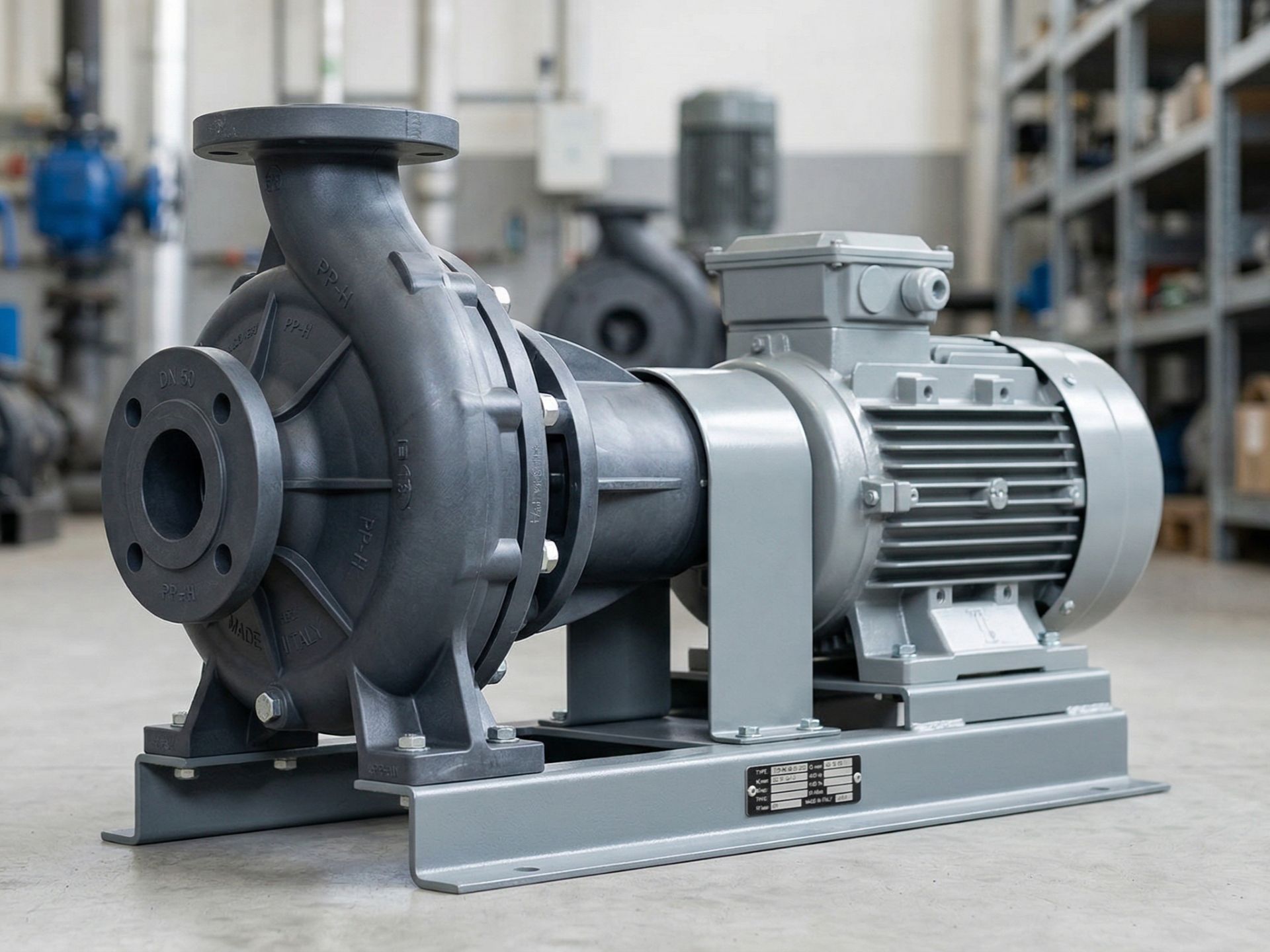
    The three thermoplastic materials compared: PP, PVC and PVDF

    Polypropylene (PP)

    the most versatile option

    Polypropylene is the most widely used thermoplastic in the manufacture of pumps for corrosive fluids, and for good reason. It offers excellent resistance to most dilute acids, saline solutions and bases, with a maximum operating temperature of 80–90°C.

    PP is the ideal choice for dilute acids and bases in non-oxidising environments, galvanic solutions based on dilute sulfuric acid, saline solutions and pickling baths, and processes where material cost is a critical factor.

    The main limitation of polypropylene is its poor resistance to strong oxidising agents (such as concentrated nitric acid and high-concentration hydrogen peroxide) and to chlorinated organic solvents.

    PVC

    the low-temperature specialist

    PVC offers chemical resistance similar to PP for many acids, with one specific advantage: it is the material of choice for sodium hypochlorite, a reagent widely used in water treatment and electroplating plants.

    However, its maximum operating temperature is limited to 60°C, restricting its use to processes at ambient temperature or slightly above. PVC is not suitable for organic solvents and aromatic hydrocarbons.

    Typical applications include fume scrubbers, containment tanks and sodium hypochlorite dosing circuits.

    PVDF

    superior chemical resistance

    Polyvinylidene fluoride is the highest-performing thermoplastic for aggressive acid applications. The presence of fluorine atoms in the polymer chain ensures more stable chemical bonds, providing exceptional resistance to concentrated strong acids.

    PVDF withstands sulfuric acid up to 98% concentration, hydrochloric acid at any concentration, concentrated nitric acid and strong oxidising agents. Its maximum operating temperature reaches 100°C, with good dimensional stability under load.

    The higher cost compared to PP and PVC is justified by longer service life in extreme environments and reduced downtime for maintenance.

    PVDF is the mandatory choice for magnetic drive pumps handling concentrated acids, high-temperature concentrated sulfuric acid transfer, pharmaceutical processes where purity is critical, and applications involving hydrofluoric acid.

    Quick comparison table

    Property

    PP

    PVC

    PVDF

    Max. operating temp.

    80-90°C

    60°C

    100°C

    Dilute sulfuric acid

    Excellent

    Good

    Excellent

    Concentrated sulfuric acid

    Poor

    Poor

    Excellent

    Hydrochloric acid

    Good

    Good

    Excellent

    Nitric acid

    Poor

    Poor

    Good

    Sodium hypochlorite

    Good

    Excellent

    Good

    Organic solvents

    Poor

    Poor

    Fair

    Relative cost

    Low

    Low

    High

    CNC machinability

    Excellent

    Buona

    Buona

    Pump types for acids: which configuration to choose

    Horizontal centrifugal pumps with mechanical seal

    Horizontal centrifugal pumps are the most common type for transferring corrosive fluids. The fluid enters the impeller axially and is accelerated outward by centrifugal force, generating flow and head.

    The mechanical seal is the most critical component: it is the interface between the rotating part (shaft) and the stationary part (casing), and must prevent any fluid leakage. Single seals are adequate for low-hazard fluids, while a double flushed seal adds a safety barrier with a barrier fluid between the two seal faces.

    Nuova Darimpianti’s PMC series pumps feature casings and impellers machined from solid blocks of polymer on 3-axis and 5-axis CNC machining centres — a method that delivers tighter dimensional tolerances and higher internal pressure resistance compared to moulded pumps. The PMC-1 series is fitted with a single mechanical seal, while the PMC-2 series features a double flushed seal for maximum safety when pumping concentrated acids and hazardous liquids.

    Magnetic drive pumps: zero leakage

    Magnetic drive pumps completely eliminate the mechanical seal. Motion is transmitted from the motor shaft to the impeller through a pair of magnets separated by a containment shell. There is no physical contact between the drive side and the fluid.

    This design guarantees absolute zero leakage — a decisive advantage when pumping concentrated acids, toxic solvents or fluids prone to crystallisation that would damage a traditional mechanical seal.

    Nuova Darimpianti’s HTM series is a horizontal centrifugal magnetic drive pump available in PP, PVC and PVDF, designed specifically for strong acids, hazardous fluids and applications where safety is the top priority.

    The limitations of magnetic pumps include sensitivity to dry running (which can demagnetise the magnets) and generally lower head than mechanically sealed pumps at the same power rating.

    Vertical pumps: ideal for tank-mounted installation

    Vertical pumps are installed directly on the edge of the tank or vessel, with the shaft and impeller submerged in the fluid. This configuration eliminates the mechanical seal problem entirely, as there is no fluid passage through external gaskets.

    Nuova Darimpianti’s VSK series is a cantilever vertical pump without guide bushings: the absence of wetted sliding parts dramatically reduces wear, making it ideal for fluids containing suspended solids or abrasive particles.

    Vertical pumps are particularly suited to galvanic tanks, acid storage vessels, scrubber recirculation systems and applications where floor space is limited.

    Drum transfer pumps

    For emptying drums and containers, portable and easy-to-handle solutions are required. PP and PVDF drum transfer pumps enable safe transfer of acids and bases from industrial drums without the need for tilting, reducing the risk of spills.

    How to size the pump: key parameters

    Selecting the right material and type is not enough — the pump must be correctly sized for the system’s operating conditions.

    The key parameters are:

    • flow rate, the volume of fluid to be transferred per unit time, expressed in litres per minute or cubic metres per hour
    • head, the energy the pump must impart to the fluid to overcome the system’s friction losses and static height difference, expressed in metres of liquid column
    • and NPSH (Net Positive Suction Head), the parameter that determines whether the pump can draw fluid without cavitation occurring


    Cavitation is a destructive phenomenon that occurs when suction pressure drops below the fluid’s vapour pressure, causing the formation and violent collapse of vapour bubbles on the impeller. In a plastic pump, cavitation can erode the impeller very rapidly.

    A common mistake is sizing the pump based solely on motor power in HP or kW. The critical parameter is actually the torque transmitted to the shaft, which determines the pump’s ability to overcome fluid resistance. For viscous or dense fluids, a pump with a powerful motor but insufficient torque will not perform correctly.

    A common mistake is sizing the pump based solely on motor power in HP or kW. The critical parameter is actually the torque transmitted to the shaft, which determines the pump’s ability to overcome fluid resistance. For viscous or dense fluids, a pump with a powerful motor but insufficient torque will not perform correctly.

    Quick selection guide: which pump for which acid

    To simplify the decision, here are the most common material-type combinations for the main industrial acids:

    • \Sulfuric acid (H₂SO₄):

    For concentrations up to 70% and temperatures up to 80°C, the choice is PP with a horizontal centrifugal pump (PMC series). For concentrations above 70% or elevated temperatures, PVDF is necessary, preferably with a magnetic drive pump (HTM series) to eliminate leakage risk.

    • \Hydrochloric acid (HCl):

    At any concentration, PVDF offers the best resistance. For dilute solutions at ambient temperature, PP is a valid and economical alternative. The vertical pump (VSK series) is ideal for direct suction from tanks.

    • \Nitric acid (HNO₃):

    As a strong oxidiser, nitric acid attacks PP. PVDF is mandatory for concentrations above 40%. For dilute solutions, PVC may be adequate up to 60°C.

    • \Sodium hypochlorite (NaClO):

    PVC is the preferred material for sodium hypochlorite. Vertical pumps for dosing from storage tanks or horizontal PMC pumps for distribution circuits.

    • \Hydrofluoric acid (HF):

    Requires exclusively PVDF with a magnetic drive pump (HTM series) for maximum safety. Hydrofluoric acid is highly toxic and no leakage is acceptable.

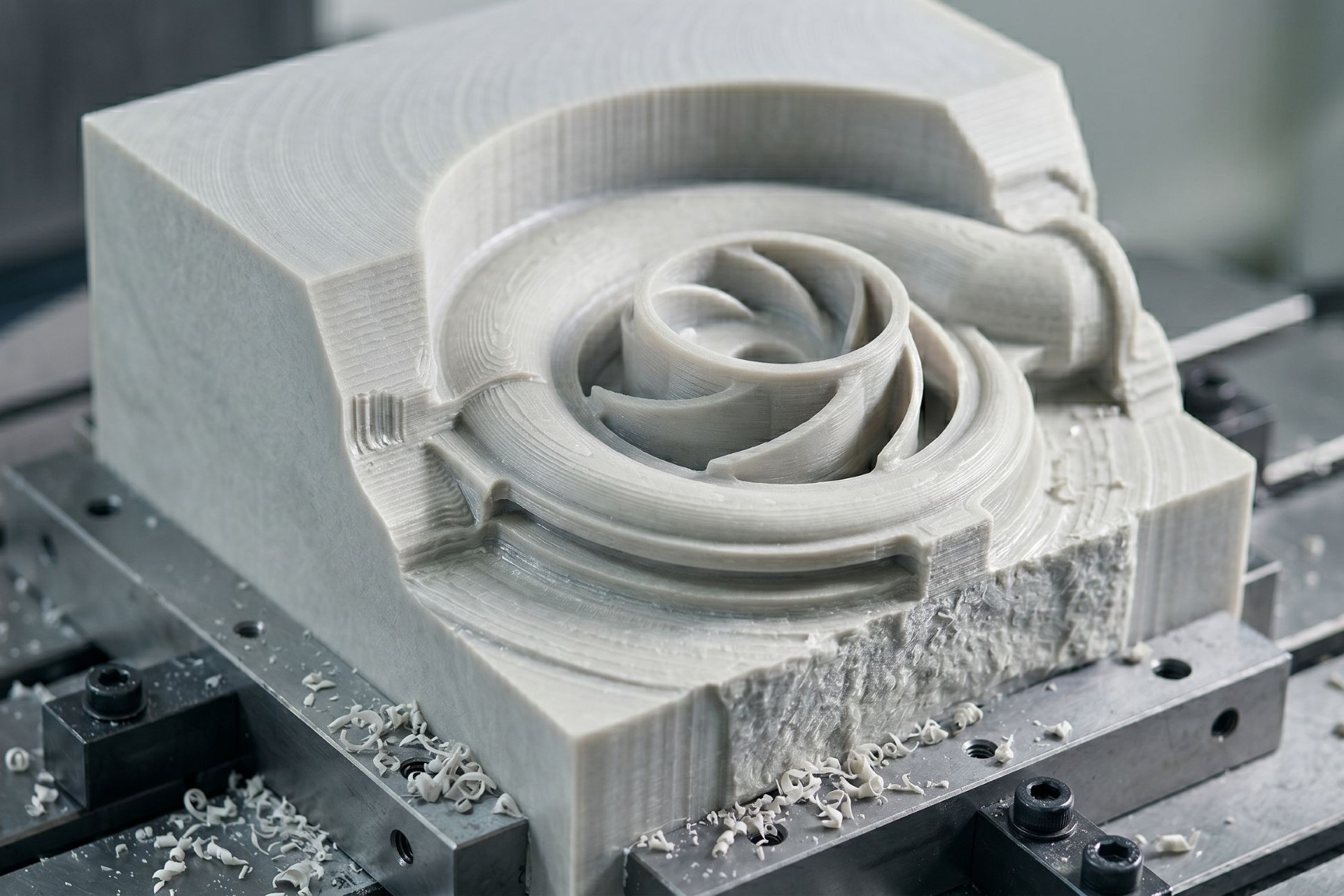
    The advantage of solid-block CNC machining

    An often overlooked aspect when choosing an acid pump is the manufacturing method of the pump casing. Most manufacturers use injection moulding or rotational moulding — processes that can introduce internal stresses in the material and non-uniform wall thickness.

    Nuova Darimpianti manufactures pump casings by solid-block machining: every component is machined from a solid block of polymer on 3-axis and 5-axis CNC machining centres.

    This method guarantees no residual internal stresses, millimetre-precision dimensional tolerances, uniform and controlled wall thickness throughout the pump casing, and higher internal pressure resistance compared to moulded parts.
    Frequently asked questions

    Which material is better for sulfuric acid: PP or PVDF?

    It depends on the concentration. PP performs well up to approximately 70% at ambient temperature. For higher concentrations or elevated temperatures, PVDF is essential due to its superior chemical resistance to strong oxidisers.

    Can magnetic drive pumps run dry?

    No, dry running is the main risk for magnetic pumps. The absence of fluid to lubricate and cool the internal bearings can cause overheating and demagnetisation of the magnets. Dry-run protection devices are essential.

    How often should the mechanical seal be replaced on an acid pump?

    Seal life depends on the fluid type, temperature and duty cycle. Under typical conditions, a mechanical seal on an acid pump lasts between 6 and 18 months. With the PMC-2 double flushed seal, the barrier fluid significantly extends seal life.

    What happens if I choose the wrong material?

    Chemical corrosion can manifest as polymer swelling, stress cracking, loss of mechanical strength or, in the worst cases, sudden casing failure with fluid spillage. This is why consulting chemical compatibility charts before selecting the material is essential.

    Can Nuova Darimpianti build custom pumps?

    Yes. Thanks to solid-block CNC manufacturing, Nuova Darimpianti builds pumps in custom configurations for material, dimensions, connections and accessories. Every pump can be engineered to the specific requirements of your plant.

    Choose the right pump for your process

    Need technical advice on choosing the right pump for your process?
    Contact our engineers for a personalised quotation.


    Correct selection of a pump for corrosive acids requires careful analysis of four factors: the type of acid and its concentration, the operating temperature, the required flow rate and head, and the safety level demanded.

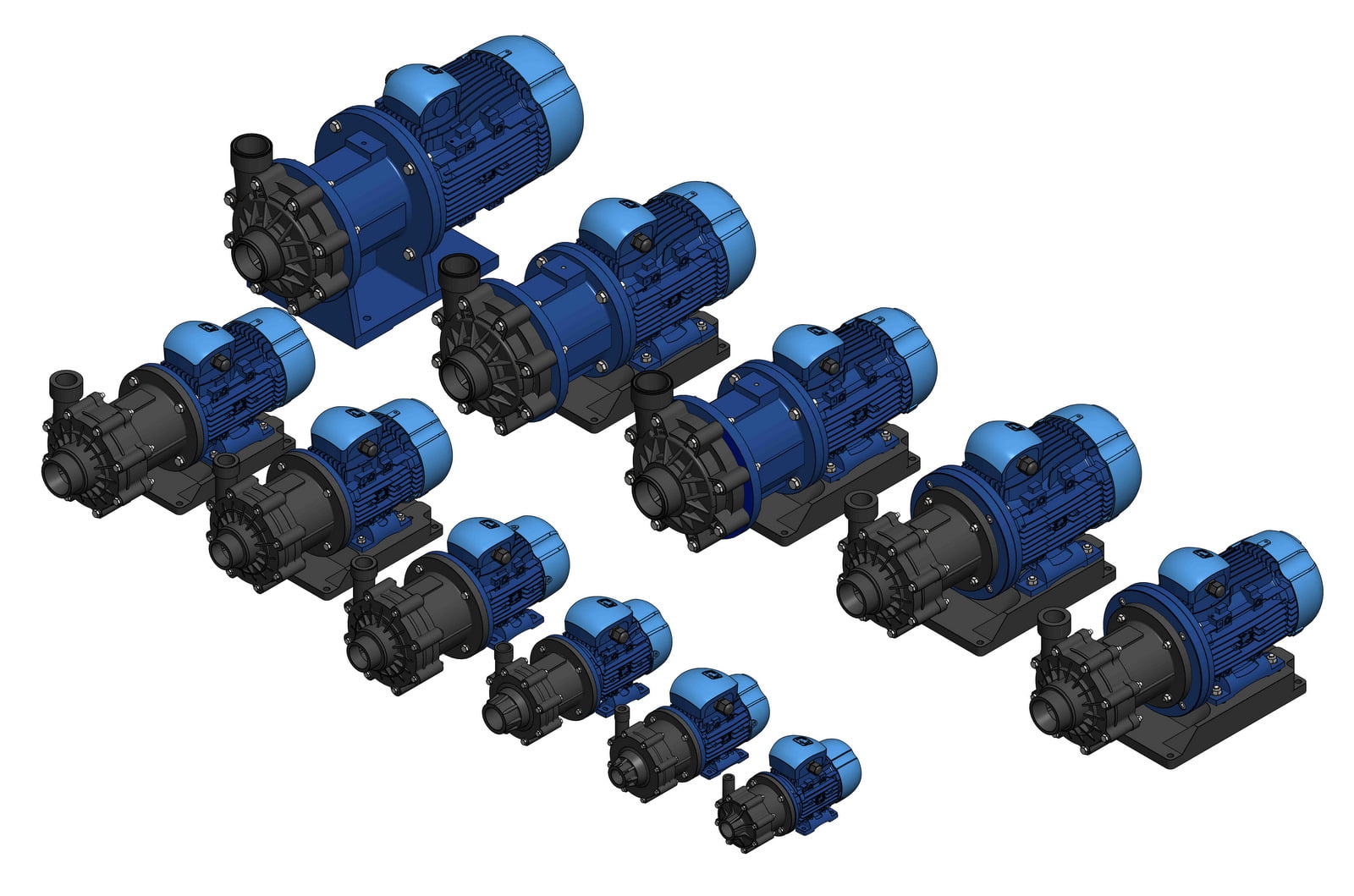
    Nuova Darimpianti designs and manufactures horizontal centrifugal pumps (PMC-1 and PMC-2 series), magnetic drive pumps (HTM series) and vertical pumps (VSK, VGA, VL series) in PP, PVC and PVDF, all machined from solid blocks using CNC technology.
      Magnetic drive pumps

      Magnetic Drive Pumps

      How They Work and When to Choose Them

      Magnetic Drive Pumps: How They Work and When to Choose Them

      Every mechanical seal, no matter how well engineered, is a compromise: a contact point between a rotating and a stationary part that will eventually fail. In a plant handling hydrofluoric acid, chlorinated solvents or toxic fluids, “eventually” is not acceptable.

      Magnetic drive pumps eliminate the problem at its source. There is no mechanical seal, no contact point, no possibility of leakage. Motion is transmitted to the impeller through a magnetic field that passes through a sealed containment barrier, keeping the fluid completely isolated from the outside environment.

      This technical guide explains how magnetic drive pumps work, analyses the real advantages and limitations of the technology, and helps identify the applications where magnetic coupling is the safest and most cost-effective choice.

      Pompa a trascinamento magnetico serie HTM in PVDF - Nuova Darimpianti

      How it works: transmitting motion without contact

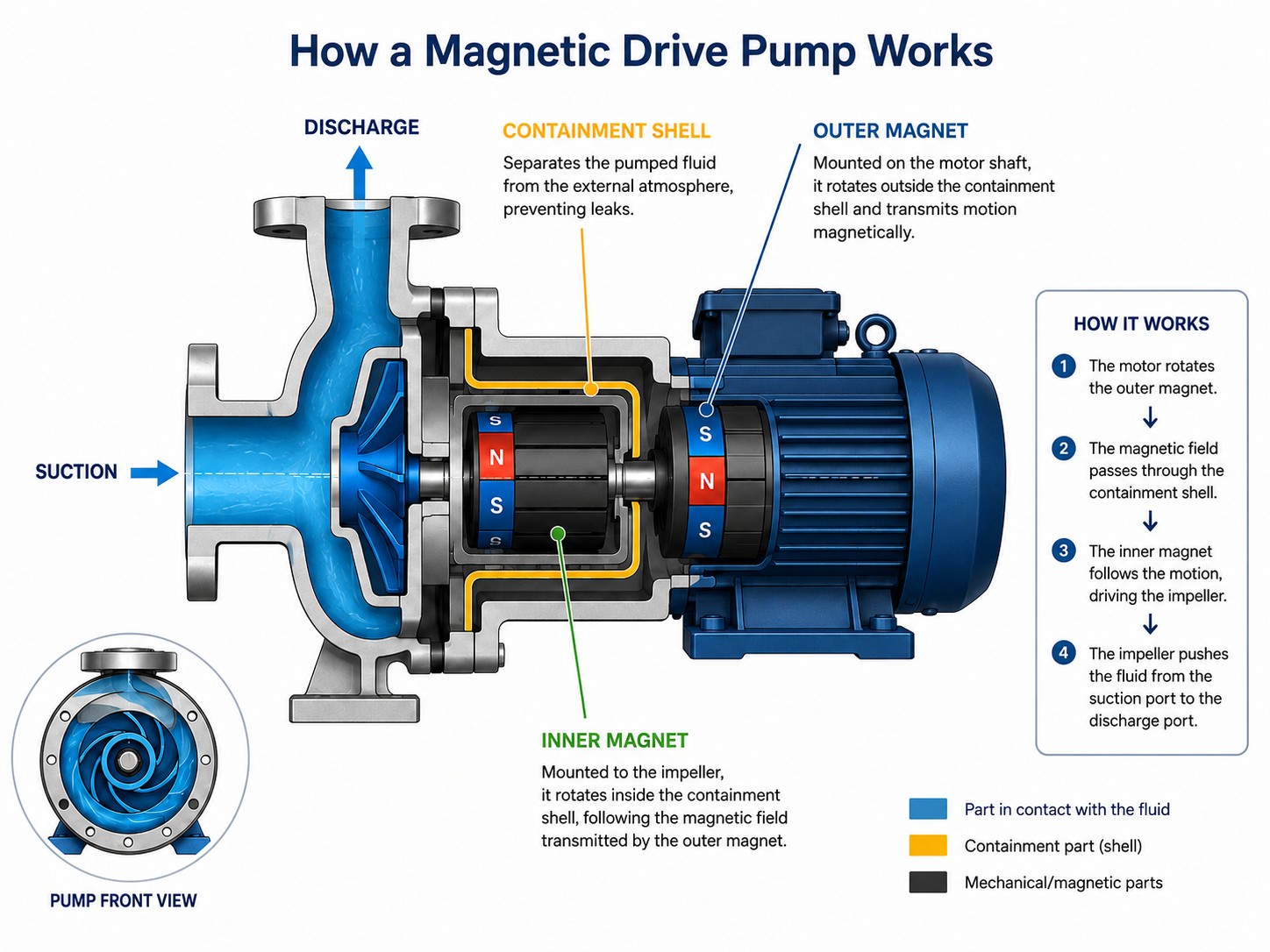
      Schema funzionamento pompa a trascinamento magnetico con magnete esterno, bicchiere di contenimento e magnete interno

      The heart of a magnetic drive pump is the coupling system that replaces the traditional shaft seal. The mechanism is elegant in its simplicity.

      The three key components

      The system consists of three main elements. The outer magnet (or drive magnet) is connected to the electric motor shaft and rotates outside the pump casing. The inner magnet (or driven magnet) is attached to the impeller and is immersed in the pumped fluid. Between the two sits the containment shell, a sealed barrier made of non-magnetic material that physically separates the drive side from the hydraulic side.

      How the drive works

      When the electric motor rotates the outer magnet, the magnetic field passes through the containment shell wall and sets the inner magnet in rotation, which in turn drives the impeller. There is no physical contact between the dry side (motor) and the wet side (fluid). The only barrier between the fluid and the outside environment is the containment shell — a completely static component with no mechanical wear.

      This principle guarantees an absolute hermetic seal for the entire service life of the pump, with no need for adjustments, periodic replacements or external lubrication.

      The role of the containment shell

      The containment shell is the most critical component from a design standpoint. It must be made of a material that simultaneously meets three requirements: magnetic transparency (it must not attenuate the field), chemical resistance to the pumped fluid, and mechanical strength to withstand internal pressure.

      In metallic magnetic drive pumps, the containment shell is typically made of Hastelloy or austenitic stainless steel, but these materials generate eddy currents that reduce efficiency and heat the fluid. In thermoplastic pumps such as Nuova Darimpianti’s HTM series, the containment shell is made of engineering plastic, which generates no eddy currents and offers excellent chemical resistance. The result is superior magnetic efficiency and zero induced heating of the fluid.

      Real advantages over mechanically sealed pumps

      Choosing a magnetic drive pump goes beyond simply eliminating the mechanical seal. The advantages extend to plant safety, operating costs and process quality.

      Zero fugitive emissions

      European and international safety regulations (ATEX Directive, EPA Method 21, ISO 15848) impose increasingly stringent limits on fugitive emissions. Every mechanical seal is a potential emission source. Magnetic drive pumps, having no shaft penetration through the pump casing, meet the most restrictive regulations without the need for additional monitoring systems.

      In ATEX-classified environments (zones with potentially explosive atmospheres), the absence of any leakage point drastically reduces ignition risk and simplifies risk assessment.

      Reduced maintenance costs

      The mechanical seal is the component that requires the most maintenance in a centrifugal pump. Replacing it involves plant downtime, partial pump disassembly and specialised personnel. In applications with concentrated acids, a mechanical seal typically lasts between 6 and 18 months.

      By eliminating the mechanical seal, a magnetic drive pump reduces scheduled maintenance shutdowns, eliminates the need to stock seal spare parts, cuts technical intervention costs and extends the intervals between general overhauls. The slightly higher initial cost of a magnetic drive pump is typically recovered within 12–24 months through maintenance savings.

      No fluid contamination

      In mechanically sealed pumps, the seal faces release microscopic wear particles into the pumped fluid. In pharmaceutical applications, ultra-pure water treatment and semiconductor manufacturing, this contamination is unacceptable.

      Magnetic drive pumps, having no sliding parts in contact with the fluid (except for the impeller support bearings), deliver a significantly higher level of fluid purity.

      No barrier fluid consumption

      Double mechanical seal pumps (such as Nuova Darimpianti’s PMC-2 series) require a barrier fluid that must be compatible with the process fluid, maintained at constant pressure and periodically topped up or replaced. The magnetic drive pump eliminates this requirement entirely, simplifying installation and reducing consumables.

      Limitations and precautions: when a magnetic pump is not the right choice

      No technology is universal. Magnetic drive pumps have specific limitations that must be carefully evaluated during the selection process.

      The dry-running risk

      The most critical limitation of magnetic drive pumps is their sensitivity to dry running. The internal bearings of the impeller are lubricated and cooled by the pumped fluid. If the pump operates without fluid, even for a few minutes, the bearings overheat and sustain damage, and in the worst cases the magnets lose their magnetic properties due to heat (demagnetisation).

      To prevent this, it is essential to install level sensors in the suction vessel, provide dry-run protection (such as a thermal relay or flow sensor), and never start the pump with the discharge valve closed without a bypass line.

      Transmissible torque and decoupling

      The magnetic coupling has a maximum transmissible torque limit. If the fluid resistance exceeds this limit — due to a sudden blockage in the discharge line, excessive fluid viscosity or a foreign body in the impeller — the magnets “slip” and motion transmission stops. This phenomenon, known as magnetic decoupling, protects the motor from overload but requires manual intervention to restore operation.

      For applications with viscous fluids (above 200–300 cP) or frequent sudden load variations, a mechanically sealed pump may be more appropriate.

      Head and power

      At the same size and motor power, magnetic drive pumps generally develop lower head than mechanically sealed pumps. This is because part of the energy is dissipated in the magnetic coupling (especially in metallic containment shells, less so in plastic versions). For applications requiring high head, a larger pump size must be selected.

      Temperature and suspended solids

      Permanent magnets lose magnetic strength as temperature increases. Above 200°C (in metallic versions) or 100°C (in plastic versions), transmissible torque decreases significantly. Additionally, fluids with suspended solid particles can damage internal bearings more rapidly than in a mechanically sealed pump.

      Ideal applications for magnetic drive pumps

      Magnetic coupling is the technically superior choice wherever the priority is absolute zero leakage. Here are the applications where this technology delivers the greatest value.

      Chemical and petrochemical industry

      Pumping concentrated acids (sulfuric, hydrochloric, hydrofluoric), chlorinated solvents, strong bases and toxic reagents is the classic application for magnetic drive pumps. Safety regulations classify many of these fluids as hazardous substances whose release must be prevented by all technically available means.

      Surface treatment and electroplating

      In electroplating plants, tanks contain acid and alkaline solutions at controlled temperatures that must be transferred without contamination or leakage. The magnetic drive pump is ideal for recirculation and transfer between galvanic baths based on chromic acid, sulfuric acid and hydrofluoric acid.

      Pharmaceutical and food industry

      Pumped fluid purity is a non-negotiable requirement. Magnetic drive pumps, releasing no particles from seals, meet the requirements of processes where contamination must be reduced to zero.

      Water treatment and scrubbers

      Dosing and transferring chemical reagents (sodium hypochlorite, sulfuric acid for pH correction, polyelectrolytes) in water treatment plants requires reliable, leak-free pumps — especially in outdoor installations or unattended facilities (see VSK pumps series).

      Semiconductor manufacturing

      The ultra-pure water and chemical reagents used in chip production must be transferred without any ionic contamination. PVDF magnetic drive pumps are the industry standard for these applications.

      Nuova Darimpianti’s HTM series: magnetic drive in thermoplastic

      The HTM series is the horizontal centrifugal magnetic drive pump designed and manufactured by Nuova Darimpianti specifically for corrosive and hazardous fluids.

      Solid-block CNC construction

      Unlike most magnetic drive pumps on the market, which are produced by injection moulding, the HTM series is manufactured by solid-block machining: every component — pump casing, impeller, containment shell — is machined from a solid block of polymer on 3-axis and 5-axis CNC machining centres.

      This manufacturing method ensures no residual internal stresses in the material (which in moulded parts can cause cracking under chemical stress), precision dimensional tolerances that guarantee optimal coupling between magnets and containment shell, and uniform controlled wall thickness that maximises internal pressure resistance.

      Available materials

      The HTM series is available in three thermoplastic materials. Polypropylene (PP) is suitable for dilute acids, saline solutions and bases at temperatures up to 80°C — the most economical choice for non-oxidising fluids. PVC is ideal for sodium hypochlorite and ambient-temperature solutions up to 60°C. PVDF offers the highest chemical resistance for concentrated acids, solvents and oxidising fluids up to 100°C.

      Key technical features

      The HTM series covers flow rates from a few litres per minute up to significant industrial volumes, with head values suited to transfer and recirculation applications. The engineering-plastic containment shell eliminates the eddy current losses typical of metallic shells, improving overall pump efficiency.

      Every HTM pump can be custom-configured for connection sizes, material type and motor power, thanks to the flexibility of solid-block CNC manufacturing.

      Magnetic drive vs mechanical seal: a practical decision guide

      The choice between magnetic coupling and mechanical seal is not always straightforward. Here are the practical criteria to guide the decision.

      Choose the magnetic drive pump (HTM) when: the fluid is toxic, carcinogenic or highly hazardous; regulations require zero fugitive emissions; the fluid tends to crystallise (crystallisation destroys mechanical seals); the plant is not continuously manned and leakage cannot be tolerated; mechanical seal maintenance costs are excessive.

      Choose the mechanically sealed pump (PMC-1 or PMC-2) when: high head is required that the magnetic version cannot achieve; the fluid contains suspended solids that would damage magnetic pump bearings; the temperature exceeds magnet limits; frequent load variations or unstable process conditions occur; fluid viscosity exceeds 200 cP.

      Intermediate solution — double flushed seal (PMC-2): if the fluid is hazardous but operating conditions are not compatible with a magnetic drive pump, the PMC-2 series with double flushed seal offers a high level of safety, with the barrier fluid acting as an additional defence against leakage.

      Frequently asked questions

      What is the main difference between a magnetic drive pump and a mechanically sealed pump?

      The fundamental difference is that in a magnetic drive pump there is no shaft penetration through the pump casing. Motion is transmitted through a magnetic field that passes through a sealed wall (the containment shell). This completely eliminates leakage risk, which in mechanically sealed pumps depends on the integrity of the seal faces.

      Do magnetic drive pumps consume more energy?

      In versions with a metallic containment shell, yes: eddy currents cause a power loss of 5–15%. In pumps with a plastic containment shell, such as Nuova Darimpianti’s HTM series, magnetic losses are negligible and efficiency is comparable to mechanically sealed pumps.

      What happens if a magnetic drive pump runs dry?

      Dry running is the primary risk for magnetic drive pumps. Without fluid to lubricate the internal bearings, rapid overheating occurs which can damage the bearings and, in severe cases, demagnetise the magnets. Dry-run protection (level sensors, thermal relays, flow sensors) is essential.

      Which fluids are recommended for magnetic drive pumps?

      Any fluid where a leak would be unacceptable: concentrated acids (sulfuric, hydrochloric, hydrofluoric, nitric), toxic solvents, carcinogenic fluids, expensive reagents, crystallising fluids and pharmaceutical solutions requiring absolute purity.

      Can the HTM series be customised?

      Yes. Being manufactured from solid blocks via CNC machining, the HTM series can be configured for material (PP, PVC, PVDF), connection sizes, flow rate and head. Nuova Darimpianti engineers custom solutions for specific plant requirements.

      The safe choice for fluids that allow no compromise

      Magnetic drive pumps are not the solution for every application, but when the fluid is hazardous, toxic or corrosive and zero leakage is not optional but a requirement, they represent the most reliable technology available.

      Nuova Darimpianti’s HTM series combines the magnetic drive principle with solid-block CNC machining in thermoplastic materials, delivering a leak-free, corrosion-resistant pump built to precision tolerances that surpass moulded alternatives.