
Come Scegliere il Materiale Giusto per Pompe e Agitatori
Come Scegliere il Materiale Giusto per Pompe e Agitatori
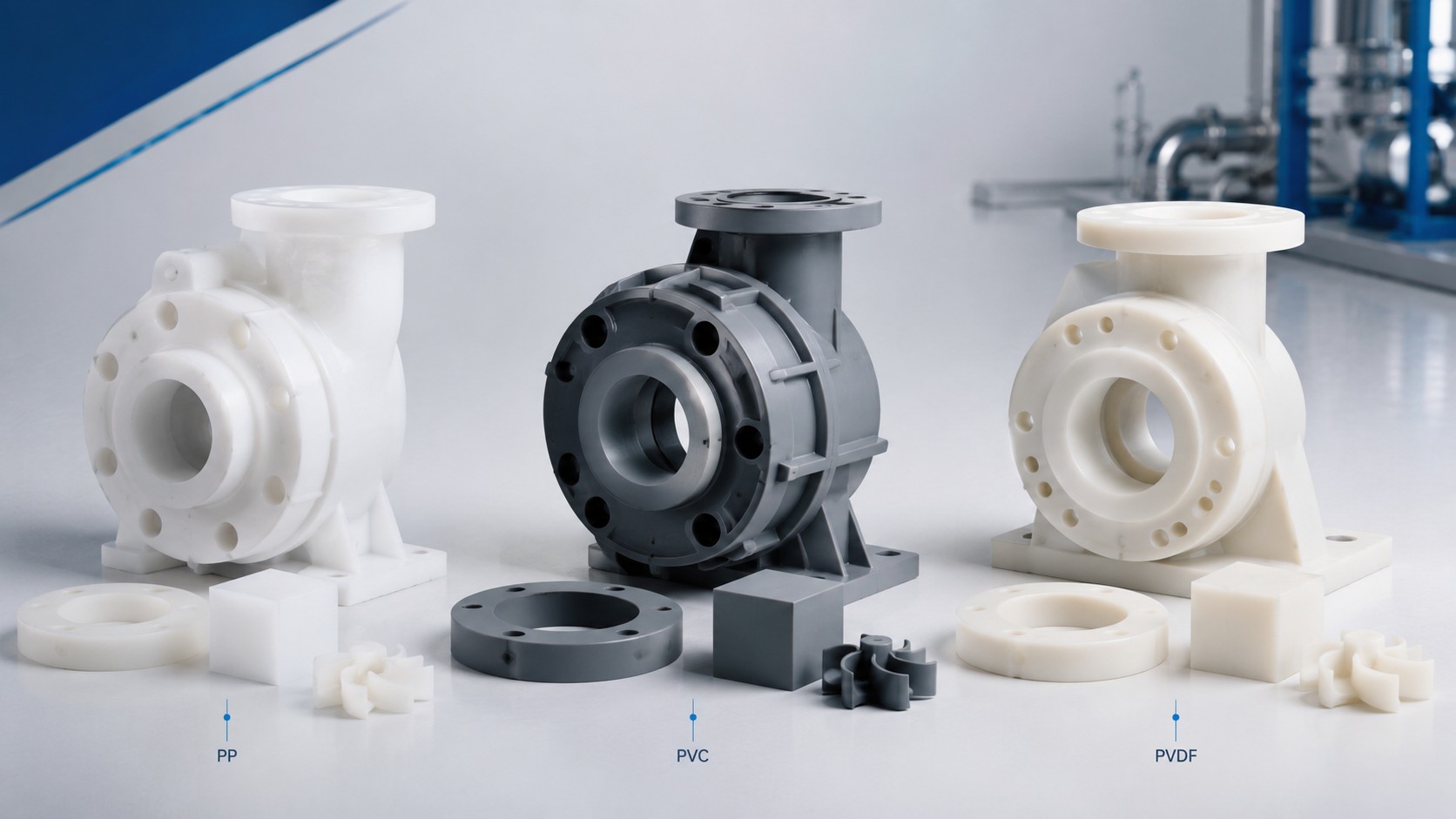
PP vs PVC vs PVDF
PP vs PVC vs PVDF: Choosing the Right Material for Chemical Pumps and Agitators
In a chemical plant, the material choice is not a secondary decision — it is the decision that determines whether your pump or agitator will last years or weeks. A polypropylene pump body exposed to concentrated nitric acid degrades within hours. A PVC impeller used above 60°C deforms under load. Investing in PVDF where PP would suffice is an unnecessary cost.
Each thermoplastic material has a precise application range, defined by the combination of three factors: the type of chemical agent, its concentration and the operating temperature. This technical guide analyses in depth the properties, limitations and ideal applications of the three main polymers used in manufacturing pumps and agitators for corrosive environments: polypropylene (PP), polyvinyl chloride (PVC) and polyvinylidene fluoride (PVDF).
Molecular structure: why different materials resist different substances
To understand the chemical resistance differences between PP, PVC and PVDF, it helps to start with their molecular structure — because it is the polymer chemistry that determines vulnerability to chemical attack.
Polypropylene (PP)
Polypropylene is a hydrocarbon chain polymer with lateral methyl groups. Its structure consists exclusively of carbon and hydrogen, giving it excellent resistance to aqueous solutions of acids and bases, but poor resistance to organic solvents (which “dissolve” the similar hydrocarbon chains) and strong oxidising agents (which break the C-H bonds).
PVC (Polyvinyl chloride)
PVC replaces one hydrogen atom with a chlorine atom in each repeating unit. The chlorine gives the polymer greater rigidity and good chemical resistance to many acids and bases. However, the presence of chlorine makes PVC sensitive to thermal degradation: above 60°C the material starts to lose dimensional stability, and above 70°C degradation becomes rapid.
PVDF (Polyvinylidene fluoride)
PVDF replaces two hydrogen atoms with two fluorine atoms in each repeating unit. The carbon-fluorine bond is one of the strongest in organic chemistry (bond energy ~485 kJ/mol versus ~413 kJ/mol for the C-H bond). This extreme stability of the C-F bond is why PVDF resists concentrated acids, aggressive solvents and elevated temperatures where PP and PVC fail.
Understanding this molecular hierarchy explains why PVDF costs more: it is not simply an “upgrade” from PP, but a material with fundamentally different and superior chemistry in terms of chemical inertness.
Polypropylene (PP): the workhorse of the chemical industry
Polypropylene is the most widely used thermoplastic in the construction of pumps and agitators for corrosive fluids. The reason is straightforward: it offers an excellent balance between chemical resistance and cost, covering the majority of standard industrial applications.
Chemical resistance of PP
Polypropylene has excellent resistance to dilute inorganic acids (sulfuric up to 70%, hydrochloric up to 30%, phosphoric at all concentrations), strong bases (sodium and potassium hydroxide at all concentrations and temperatures up to 80°C), saline solutions (chlorides, sulfates, nitrates), alcohols (methanol, ethanol, isopropanol) and deionised and ultra-pure water.
Limitations of PP
Polypropylene does not resist strong oxidising acids such as concentrated nitric acid (>50%) and chromic acid, oxidising agents such as concentrated hydrogen peroxide (>30%) and high-concentration hypochlorite, chlorinated organic solvents (dichloromethane, chloroform, trichloroethylene), aromatic hydrocarbons (benzene, toluene, xylene) and free halogens (chlorine gas, bromine).
Mechanical and thermal properties
PP’s maximum operating temperature is 80-90°C (depending on grade and mechanical stress). PP has good impact resistance at ambient temperature but becomes brittle below 0°C. Its density of 0.90-0.91 g/cm³ makes it the lightest of the three polymers, resulting in easy-to-handle components.
CNC machinability
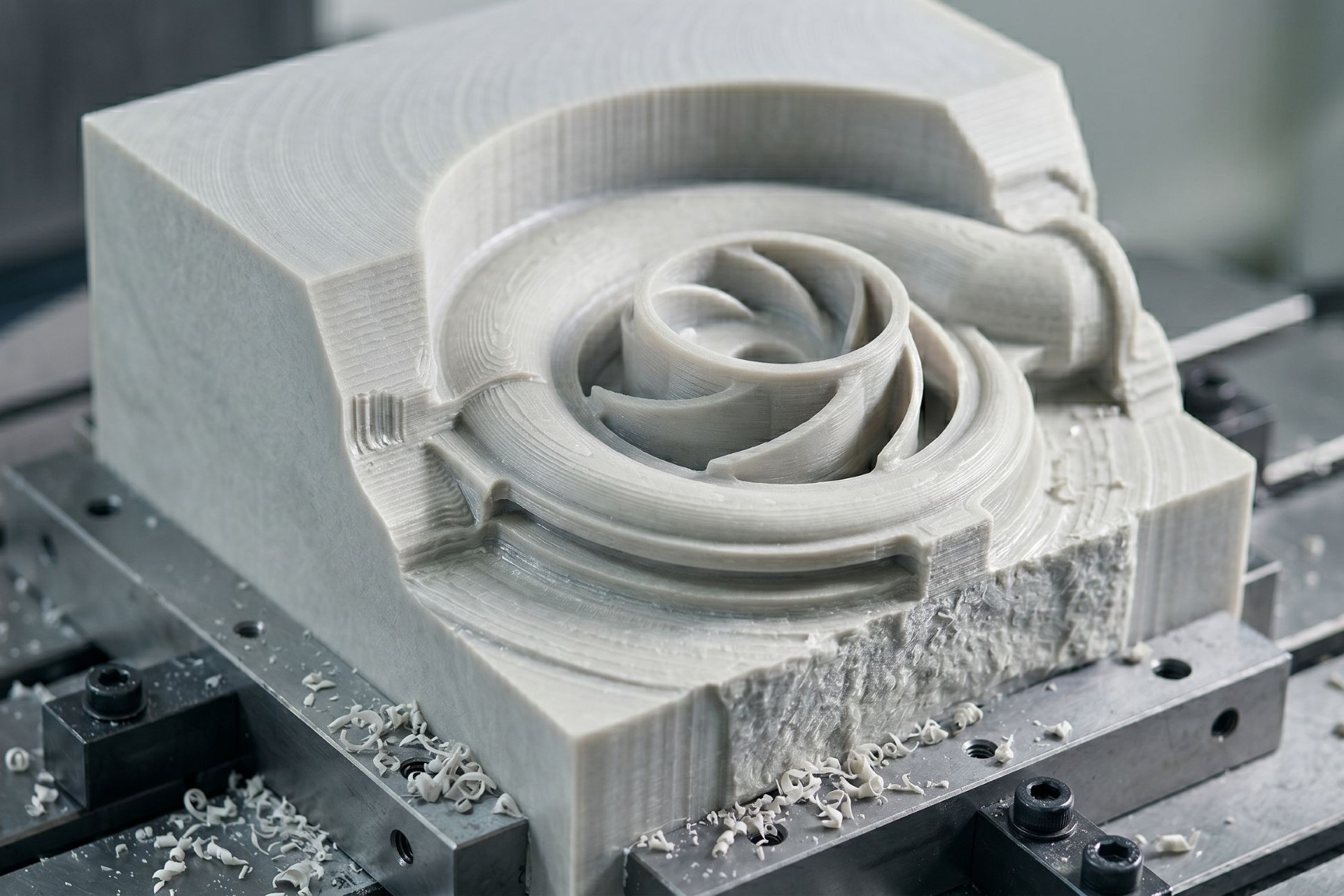
Polypropylene is an excellent material for solid-block machining. It cuts cleanly, produces neat chips and requires no lubrication during machining. Achievable tolerances are excellent. Nuova Darimpianti uses PP as the standard material for pump casings, impellers and agitator shafts machined on 3-axis and 5-axis CNC centres.
When to choose PP
PP is the correct choice for dilute acids and bases at moderate temperatures (<80°C), electroplating tanks with standard solutions, water treatment plants with non-oxidising reagents, washing and neutralisation solutions, and all applications where material cost is a determining factor.
PVC: the low-temperature specialist
PVC occupies a specific niche: it offers comparable performance to PP at ambient temperature, with a distinctive advantage in sodium hypochlorite resistance and superior rigidity that makes it ideal for structural components.
Chemical resistance of PVC
PVC has excellent resistance to dilute and medium-concentration inorganic acids (sulfuric up to 50%, hydrochloric up to 35%), sodium hypochlorite at all industrial-use concentrations (it is the preferred material for NaClO), dilute and medium-strength bases, saline solutions and seawater, and mineral oils and fats.
Limitations of PVC
PVC does not resist temperatures above 60°C (temperature is its main limitation), organic solvents (acetone, MEK, THF which dissolve it), chlorinated hydrocarbons, concentrated acids at even moderate temperatures, and concentrated amines and ammonia.
Mechanical and thermal properties
The maximum operating temperature is only 60°C — a significant limitation for many industrial processes. However, PVC has superior rigidity compared to PP and PE-HD at ambient temperature, good flame resistance (self-extinguishing due to chlorine content), and a density of 1.35-1.45 g/cm³.
When to choose PVC
PVC is the correct choice for sodium hypochlorite dosing and storage circuits, potable water treatment plants (where NaClO is the standard disinfectant), fume scrubbers for acid gas abatement at ambient temperature, tanks and vessels for dilute acid solutions in unheated environments, and applications where material rigidity is important.
PVDF: chemical resistance without compromise
PVDF is the premium material for pumps and agitators destined for the most aggressive applications. Its cost is 3-5 times higher than PP, but in many applications it is the only technically valid option.
Chemical resistance of PVDF
PVDF has excellent resistance to strong inorganic acids at any concentration (sulfuric up to 98%, hydrochloric at any concentration, nitric up to 65%), organic acids (acetic, formic, oxalic), halogens and halogenated acids (hydrofluoric acid, wet chlorine gas, bromine), hydrogen peroxide at moderate concentrations, polar organic solvents (acetone, MEK — unlike PP and PVC), and aggressive acid mixtures used in semiconductor manufacturing.
Limitations of PVDF
PVDF does not resist concentrated strong bases (NaOH > 30% at elevated temperatures — this is the critical difference from PP, which does resist), aliphatic amines (triethylamine, diethylamine), fuming sulfuric acid (oleum), some strongly basic solvents (DMF, DMSO under aggressive conditions), and concentrated nitric acid above 65% at elevated temperatures.
The poor resistance to strong bases is an often-overlooked aspect: for applications with hot concentrated caustic soda, PP is safer than PVDF.
Mechanical and thermal properties
The maximum operating temperature is 100-120°C (significantly higher than PP and PVC), with excellent dimensional stability under load even at elevated temperatures. The density is 1.75-1.78 g/cm³ (the heaviest of the three), and mechanical strength is superior to PP and PVC across the entire temperature range.
When to choose PVDF
PVDF is the mandatory choice for concentrated acids at elevated temperatures (>50°C), hydrofluoric acid at any concentration, applications involving strong oxidising agents, semiconductor industry (extreme purity requirements), pharmaceutical processes with aggressive solvents, magnetic drive pumps for highly hazardous fluids, and all applications where safety permits no compromise.
Other materials: PE-HD and Ebonite
Beyond the three main materials, Nuova Darimpianti uses two additional polymers for specific applications.
PE-HD (High-density polyethylene)
PE-HD has chemical resistance very similar to PP, but offers better environmental stress cracking resistance and greater flexibility at low temperatures. It is the preferred choice for applications with dilute hydrofluoric acid (where PP may present stress cracking issues) and for outdoor installations in cold climates.
PE-HD’s main limitations are its low maximum operating temperature (60-70°C) and lower rigidity compared to PP, which restricts its use in pressurised components.
Ebonite
Ebonite is a natural rubber vulcanised with a high sulfur content, offering excellent chemical resistance to hydrochloric acid at all concentrations, hydrofluoric acid and aggressive saline solutions. It is used as an internal lining for pumps and tanks in applications where the combination of chemical resistance and mechanical resilience is critical.
Chemical compatibility table: the most common cases
The following table summarises the compatibility of the three main materials with the most commonly used industrial chemicals. The classification uses three levels: R (resistant — safe for continuous use), PR (partially resistant — verify concentration and temperature), NR (not resistant — do not use).
| Chemical agent | Conc. | Temp. | PP | PVC | PVDF |
|---|---|---|---|---|---|
| Sulfuric acid | <70% | 60°C | R | R | R |
| Sulfuric acid | 70-98% | 60°C | NR | NR | R |
| Sulfuric acid | 96% | 80°C | NR | NR | R |
| Hydrochloric acid | <30% | 60°C | R | R | R |
| Hydrochloric acid | 37% (conc.) | 60°C | PR | PR | R |
| Nitric acid | <30% | 40°C | PR | PR | R |
| Nitric acid | >50% | any | NR | NR | R |
| Hydrofluoric acid | <50% | 40°C | PR | NR | R |
| Hydrofluoric acid | any | 60°C | NR | NR | R |
| Sodium hypochlorite | <15% | 40°C | R | R | R |
| Sodium hypochlorite | concentrated | 40°C | PR | R | PR |
| Sodium hydroxide (NaOH) | <50% | 80°C | R | PR | R |
| Sodium hydroxide (NaOH) | >50% | 80°C | R | NR | PR |
| Hydrogen peroxide | <30% | 40°C | PR | PR | R |
| Hydrogen peroxide | >30% | 40°C | NR | NR | R |
| Chromic acid | any | any | NR | NR | R |
| Ferric chloride | any | 60°C | R | R | R |
| Acetone | pure | 20°C | NR | NR | R |
| Methanol | pure | 40°C | R | PR | R |
| Chloroform | pure | 20°C | NR | NR | PR |
Important note: this table is an orientative guide. Chemical resistance depends on the specific combination of concentration, temperature, exposure duration and mechanical stress. For critical applications, always consult the manufacturer’s complete compatibility tables and request a compatibility test.
Manufacturing method: why solid-block machining makes the difference
Material selection is a necessary but not sufficient condition for a reliable pump or agitator. The method by which the material is transformed into the finished component significantly affects its performance.
The limitations of moulding
Most manufacturers of plastic pumps and agitators use injection moulding or rotational moulding. These processes have economic advantages for high volumes, but introduce potential problems: residual internal stresses generated by non-uniform cooling can cause cracking under chemical stress (Environmental Stress Cracking), non-uniform wall thickness creates weak points where the material fails prematurely, and weld lines in moulded material are zones of reduced strength.
The advantage of solid-block CNC machining
Nuova Darimpianti manufactures all critical components (pump casings, impellers, agitator shafts, containment shells) by solid-block machining on 3-axis and 5-axis CNC machining centres. This means every part is machined from a solid bar or plate of extruded material, which by definition is free from moulding-induced thermal stresses.
The advantages include complete absence of residual internal stresses (the primary factor in stress cracking), precise wall thickness control (±0.1 mm on all surfaces), no weld lines or weak points, ability to optimise geometry without mould constraints, and full traceability of the material batch used.
In applications with concentrated acids at elevated temperatures, where the material is subjected to maximum chemical and mechanical stress, the difference between a moulded part and a solid-block machined one can mean years of additional service life.
How to choose: a practical decision tree
To simplify selection, here is a logical path in four questions.
Question 1: Is the fluid a strong oxidising acid (nitric, chromic) or an organic solvent? If yes → PVDF is the mandatory choice. If no → proceed to Question 2.
Question 2: Does the operating temperature exceed 60°C? If yes → exclude PVC, choose between PP (up to 80-90°C) and PVDF (up to 100-120°C). If no → proceed to Question 3.
Question 3: Is the fluid sodium hypochlorite? If yes → PVC is the preferred choice. If no → proceed to Question 4.
Question 4: Is the acid concentrated (>70% sulfuric, >37% hydrochloric, any concentration of HF)? If yes → PVDF. If no → PP (the economical choice for most standard applications).
This decision framework covers approximately 80% of applications. For the remainder (multi-component mixtures, cyclic conditions, simultaneous presence of multiple aggressive agents), a specific analysis accounting for all factors is required.
For further details on the pumps in which these materials are used, see HTM series, PMC series and the vertical pumps category. For agitators, see EV series and EVR series.

Frequently asked questions
Is PVDF always better than PP?
No. PVDF has superior chemical resistance in most cases, but PP resists concentrated strong bases (NaOH > 30% at elevated temperatures) better. Additionally, PVDF costs 3-5 times more than PP: using it where PP is perfectly adequate is an economic waste. The correct choice always depends on the specific fluid, concentration and temperature.
Can I use PVC for sulfuric acid?
Yes, but only for dilute solutions (up to 50%) at ambient temperature (maximum 60°C). For higher concentrations or elevated temperatures, PVC is not suitable. For concentrated sulfuric acid, only PVDF provides adequate resistance.
How do I know if my fluid is compatible with a given material?
The first step is to consult the manufacturer’s chemical compatibility tables. However, these tables refer to standard conditions. For critical applications (high temperatures, high concentrations, mixtures, thermal cycling), it is advisable to request an immersion test on the specific material under actual operating conditions.
Why doesn't Nuova Darimpianti use PTFE (Teflon)?
PTFE has virtually universal chemical resistance, but it cannot be machined from solid blocks like thermoplastics. PTFE cannot be melted and injected like PP or PVDF: it is sintered from powder, a process that limits achievable geometries. Nuova Darimpianti uses PVDF because it offers chemical resistance nearly comparable to PTFE but with excellent CNC machinability, enabling the production of complex geometries such as pump casings and impellers.
Is the O-ring material as important as the pump body material?
Absolutely. A pump with a PVDF body but incompatible O-rings will still leak. Seals must be selected with the same care as the pump body. Nuova Darimpianti uses FPM (Viton), EPDM or PTFE seals depending on the process fluid.
The right material for every application
Choosing the material for pumps and agitators in corrosive environments is not a question of “better” or “worse” in absolute terms, but of suitability for the specific application. PP covers most standard industrial needs at an accessible cost. PVC excels with hypochlorite and low-temperature applications. PVDF is irreplaceable where extreme chemical resistance and elevated temperatures are required.
Nuova Darimpianti manufactures centrifugal pumps (PMC, HTM series), vertical pumps (VSK, VGA, VL series) and agitators (EV, EVR, KVL, KVRL series) in all three materials, plus PE-HD and Ebonite for specific applications. Every component is machined from solid blocks on CNC centres to guarantee maximum reliability and service life.
Related cluster articles: Pumps for Corrosive Acids, Magnetic Drive Pumps, How to Choose an Industrial Agitator.
Which material for your process fluid?
Nuova Darimpianti’s engineering team analyses your fluid (concentration, temperature, mixtures) and recommends the correct material and the right pump or agitator. Free compatibility analysis.
The right material for every application
Nuova Darimpianti manufactures centrifugal pumps (PMC, HTM series), vertical pumps (VSK, VGA, VL series) and agitators (EV, EVR, KVL, KVRL series) in all three materials, plus PE-HD and Ebonite for specific applications. Every component is machined from solid blocks on CNC centres to guarantee maximum reliability and service life.
Related cluster articles: Pumps for Corrosive Acids, Magnetic Drive Pumps, How to Choose an Industrial Agitator.